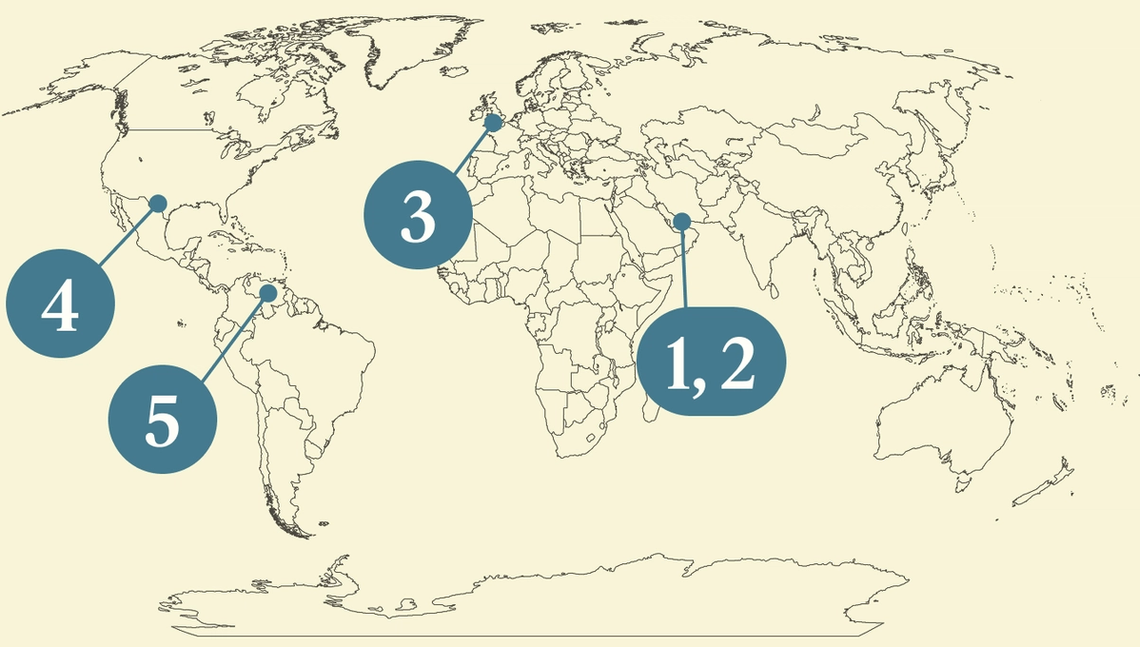
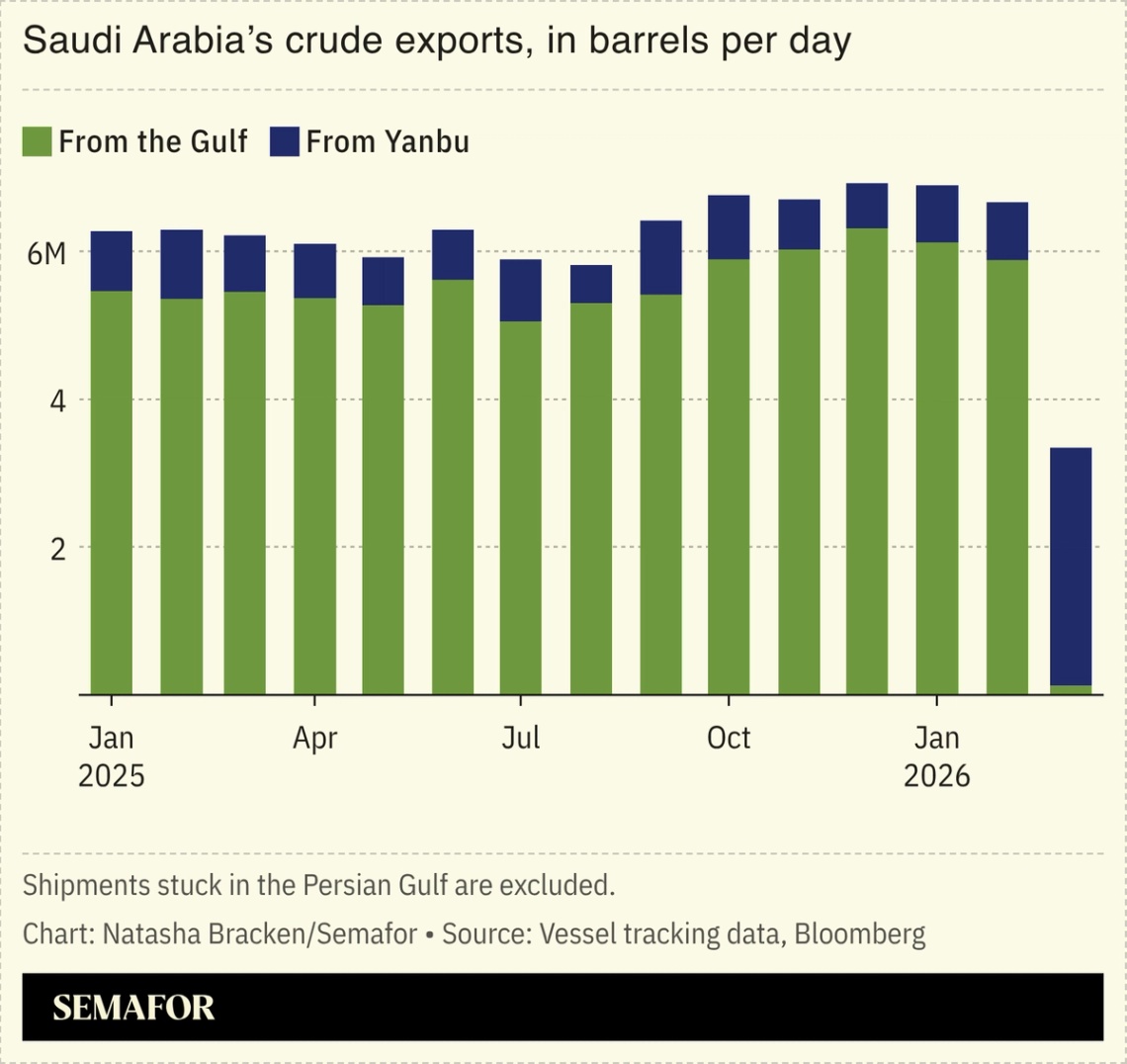
 While the daily oil price jumps up and down in response to rhetoric from US President Donald Trump or from myriad battlefield updates, there are a few key data points to watch out for to understand the real state of the energy market. Trump’s televised address Wednesday night didn’t offer much clarity about when or how the war will end. And it left open the possibility that the US could withdraw its forces without necessarily reopening the Strait of Hormuz. That’s a scary prospect for oil and gas importers, and seems to leave Iran with even more leverage over the global economy than it had before the war. Nakul Sarda, founder of the India-based investment advisory ProfitGate, offered some useful advice: Tune out the headlines (not counting Semafor’s, of course), and focus on facts about tanker movement through the strait. That includes insurance premiums — up from about 0.25% of a ship’s value before the war, to around 6% now — and the actual number of ships passing through the waterway daily, which is now about a dozen compared to more than 100 before the war. He helpfully built a public dashboard with some of this data. Another important, and possibly more reassuring, signal is the far end of oil price futures. Crude oil to be delivered in December 2028 is now about $66 per barrel, a bit higher than it was before the war but a good 40% below the price for deliveries today. That’s a sign traders expect a return to something like normal in the next couple of years, which is nice but not exactly helpful for consumers or for US politicians panicking about gasoline prices ahead of the midterm elections. In the meantime, expect more turmoil: April “will be much worse than March,” International Energy Agency chief Fatih Birol warned this week. |