In today’s edition: Strikes on Gulf aluminum plants, Saudi’s push to become a battery hub, and more ͏‌  ͏‌  ͏‌  ͏‌  ͏‌  ͏‌ 
 
sunny Manama
sunny Jeddah
sunny Dubai
rotating globe
April 2, 2026
semafor

Gulf

Gulf
Sign up for our free email briefings
 
The Gulf Today
  1. Trump: ‘two to three weeks’
  2. Aluminum output stalls
  3. Saudi eyes battery production
  4. Bevy of autonomous taxis
  5. War ripples in Egypt

The no-longer hot restaurant debut: Posh Iranian fare in Riyadh.

PostEmail
1

Trump tries to shift Hormuz burden

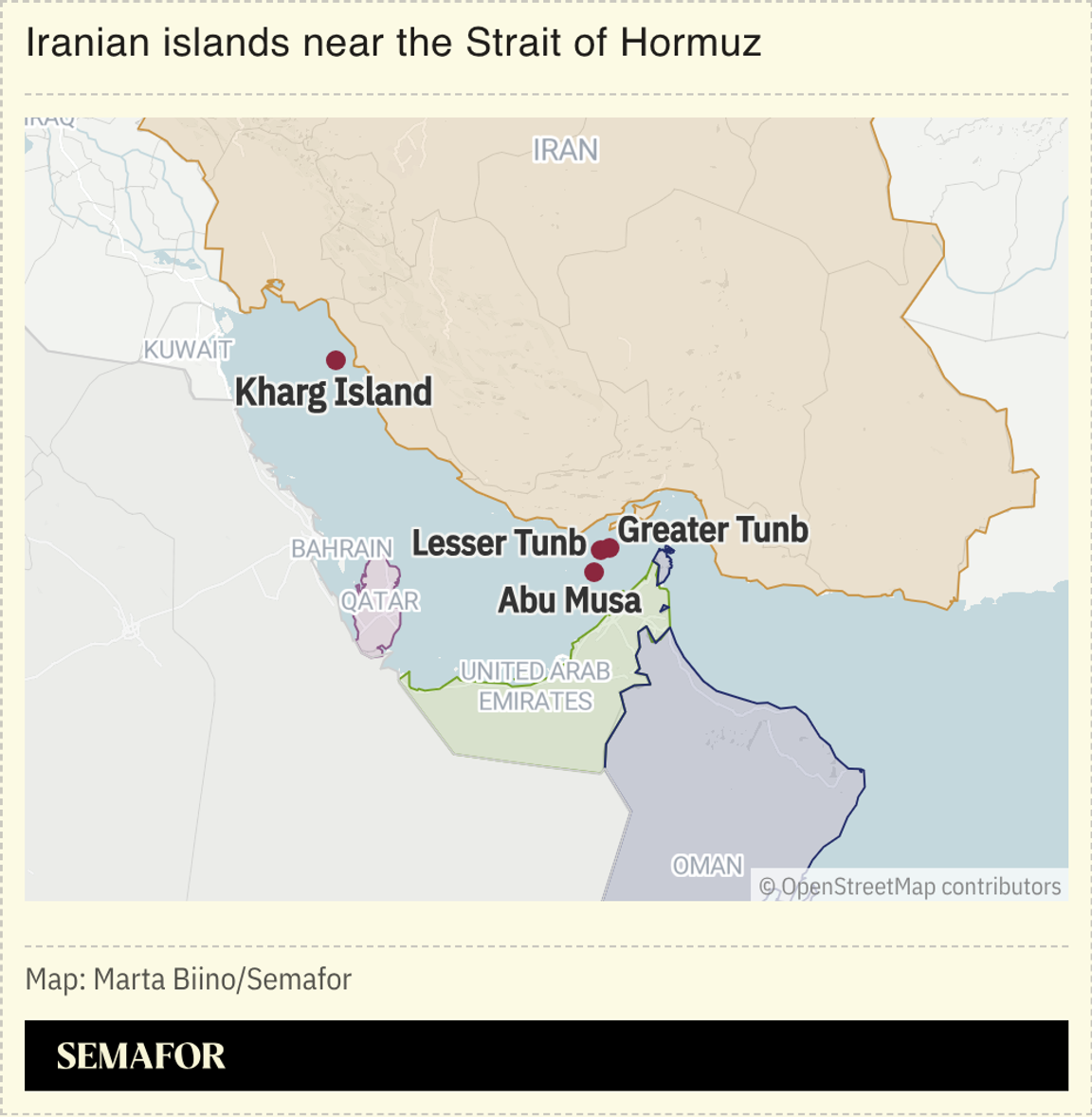
A map showing key Iranian islands close to the Strait of Hormuz.

US President Donald Trump’s Wednesday night address offered little new: Another two to three weeks of war (or military operations, as he prefers), and a warning that the US would strike Iran’s power plants if Tehran refuses a deal. “We have all the cards. They have none,” Trump said.

There was an echo of previous statements on the Strait of Hormuz, with Trump saying that keeping the chokepoint open would not be solely a US mission, and that countries that depend on Gulf oil and gas should assume responsibility to “grab it and cherish it.” The Pentagon is also, however, sending 18 more A-10 attack aircraft, which are often used to support ground operations.

More than a dozen countries have said they are willing to join efforts to reopen the strait, with former US Fifth Fleet commander Vice Adm. John Miller saying on a US Naval Institute podcast that during his watch and afterward, many countries joined the US fleet in Bahrain for exercises to demine both the strait and broader Gulf waterways.

The UAE — which, along with Bahrain, has been leading the Gulf’s diplomatic effort to pressure Iran — called on the UN Security Council to take “immediate action” to ensure “safe and secure navigation” in the waters, according to Bloomberg. Sultan Al Jaber, Group CEO of ADNOC, warned of the costs of keeping it closed and said Iran’s actions “represent global economic extortion — a threat the world cannot tolerate.”

Mohammed Sergie

PostEmail
2

Gulf aluminum output tumbles

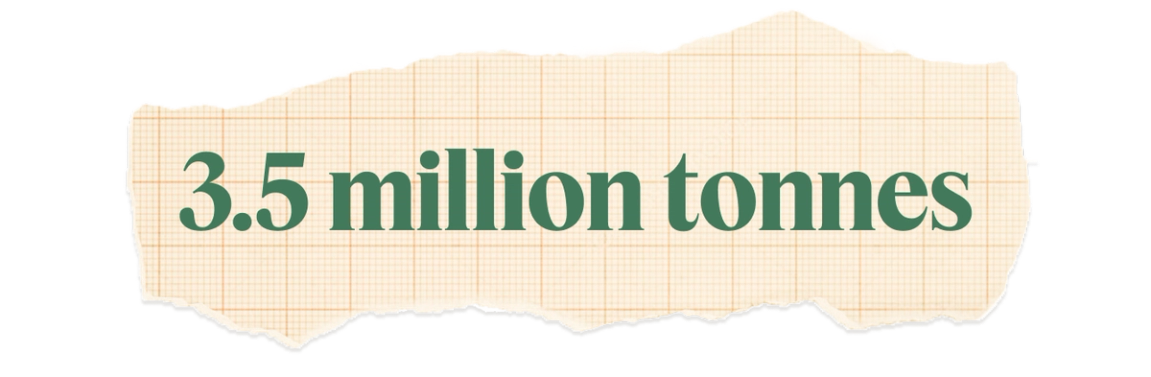
3.5 million tonnes of Gulf aluminium output is at risk because of the war.

The amount of Gulf aluminum output at risk because of the Iran war, triggering a global supply crisis according to analysts Wood Mackenzie. Emirates Global Aluminium has halted operations in Abu Dhabi, after its Al Taweelah site sustained “significant damage” during an Iranian attack on March 28. That takes 1.6 million tonnes a year of production offline and it could take a year to repair. Aluminium Bahrain (Alba)’s facility was also hit by Iran on March 28 and its 1.6 million-tonne-a-year plant may now be working at just 30% of capacity. Qatar’s Qatalum is operating at around 60% capacity.

The Gulf accounts for around 23% of global, non-China aluminum production. Most Gulf output is sold overseas and the regional crisis is having a knock-on effect globally. Aluminum is in high demand from fast-growing industries such as electric vehicles, solar panels, wind turbines, and data centres. Prices are now at their highest level in four years.

PostEmail
Semafor Exclusive
3

Saudi’s battery ambitions

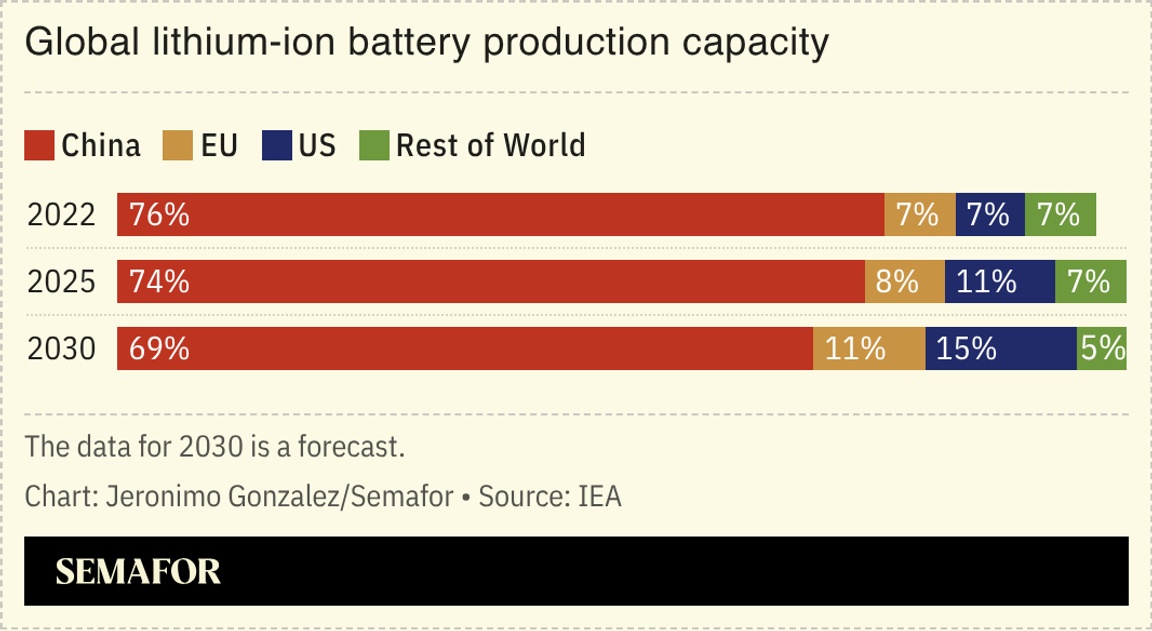
A chart showing the global lithium-ion battery production capacity.

Saudi Arabia has all the ingredients needed to be a hub for battery production, according to the chief executive of Pure Lithium, a US-based technology firm. The kingdom has lithium and vanadium in its oil-field brine, which Pure Lithium wants to use to produce rechargeable batteries, helping to cut China from supply chains, Emilie Bodoin told Semafor.

Local battery production would bolster the auto cluster that Saudi Arabia is developing in King Abdullah Economic City, near Jeddah, where state-backed EV makers Ceer and Lucid Motors are setting up assembly plants. Pure Lithium is backed by Energy Capital Group, which counts the kingdom’s Public Investment Fund among its investors.

Developing a domestic battery industry would help other PIF initiatives too, such as a PC manufacturing venture with China’s Lenovo. Saudi Arabia aims to become a hub for mining and metals processing more broadly, tapping into its estimated $2.5 trillion of resources, including copper, gold, and phosphates.

Matthew Martin

PostEmail
4

Driverless dreams continue

WeRide’s Robotaxi fleet in Dubai.
Courtesy of WeRide

The dream of driverless taxis continues in the Gulf, where the conflict with Iran has slowed but not stopped progress on autonomous transport in Abu Dhabi, Dubai, and Riyadh. Uber and WeRide added another driverless route in Saudi’s capital this week, linking shopping centers Hayat Mall and Riyadh Gallery. The expanded service comes after the vehicles completed more than 1,700 trips in a trial phase, according to the regulator.

Uber and WeRide have also launched fully driverless services in Dubai, beginning in popular residential and commercial areas Jumeirah and Umm Suqeim, with no safety monitor on board. Separately, Dubai Taxi Company plans to deploy more than 1,000 driverless cars in the city with Baidu’s Apollo Go, starting with a fleet of 50 this year. Earlier this month, Autogo, part of Abu Dhabi-backed technology company K2, began offering rides on Yas Island, and it plans to expand to Saadiyat and Al Maryah islands.

All this is bad news for the region’s taxi drivers, a largely South Asian group whose business is already down due to the conflict with Iran.

— Kelsey Warner

PostEmail
5

View: Egypt is resilient, but exposed

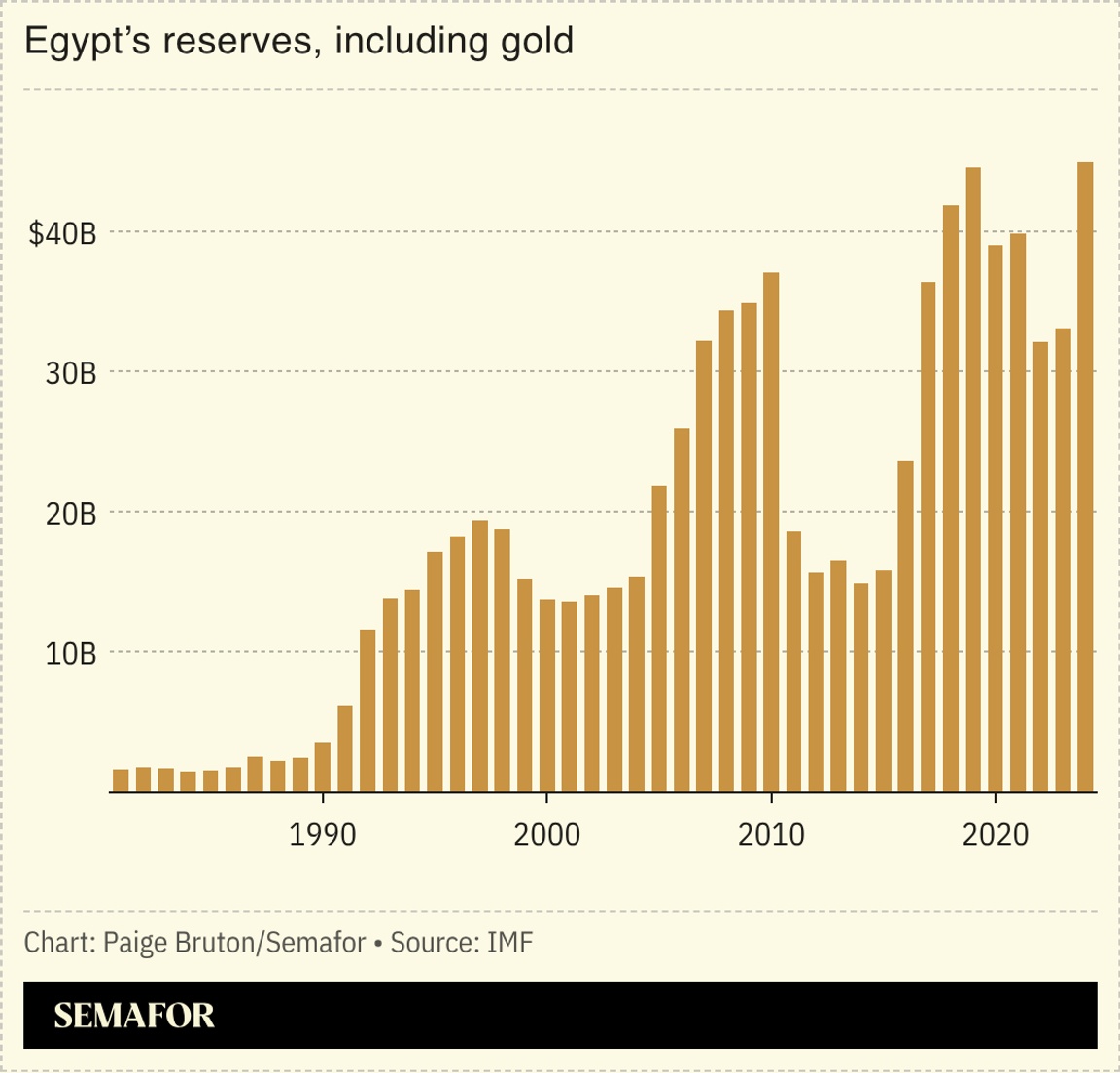
Alaa Shahine Salha, Senior executive at Saudi Research Group.A chart of Egypt’s reserves, including gold, in billions of dollars.

Egypt is one of the world’s economies most exposed to the war outside the Gulf, and while Cairo has learned from previous economic crises, structural weaknesses could force it to seek funding to help plug a chronic trade balance deficit, Alaa Shahine Salha, a senior executive at Saudi Research & Media Group, writes in a column for Semafor.

Egypt has required “two large International Monetary Fund deals supported by tens of billions of dollars in Gulf aid and investments” over the past 15 years, Shahine Salha wrote. The Gulf support reflects a view “that stability in the most populous Arab country is key to preventing wider turmoil. In 2023, the UAE alone pledged more than $30 billion as part of an IMF-backed global bailout.”

Read on for Shahine Salha’s breakdown of what Egypt has done right to boost its economy, and where the weaknesses lie. →


PostEmail
CEO Signal
The CEO Signal.

At the end of her tenure as CEO of GSK, Dame Emma Walmsley is clear-eyed about what the job required. On this week’s episode of The CEO Signal, co-hosts Penny Pritzker and Andrew Edgecliffe-Johnson spoke with Walmsley late last year, just as she was preparing to step down as CEO of GSK after planning her own succession.

After more than a decade leading one of the world’s largest pharmaceutical companies through significant change, reshaping its strategy and structure, and navigating activist campaigns, she reflects on what the job actually demands and how that understanding evolves over time.

Hear what she has to say and more on The CEO Signalwatch the full conversation now.

PostEmail
Kaman
  • The Atlantic: US President Donald Trump has signaled he intends to end the war with Iran, but all of the options available to him come with big liabilities.
  • Bloomberg: Dubai’s pitch as a stable global hub is holding for now, but the war is straining that narrative, with markets falling, flights disrupted, and investors reassessing risk.
  • The National: With concerts postponed, Dubai’s Coca-Cola Arena is reviving a COVID-era playbook and turning to a clearance sale to stay active, as it and other venues try to keep running while the main events calendar stalls.
  • The New York Times: Nearly 20,000 seafarers are stranded in the Gulf as the Strait of Hormuz remains largely shut, leaving crews distressed and running down their supplies.
  • Middle East Council on Global Affairs: Gulf states cannot afford to break with the US but are increasingly unwilling to accept a security setup where major decisions are made without them, pushing them to strengthen their own defenses, and diversify their partners.


PostEmail
Curio
A display of food from Berenjak
berenjak.ksa/Instagram

Berenjak, a buzzy Iranian restaurant that started in London before expanding abroad, opens a permanent location in Riyadh today. In the current mood, don’t expect a line. The concept, built by chef Kian Samyani around the kebab houses of Tehran, has outposts in Doha, Dubai, and Los Angeles. Its Saudi chapter began with a pop-up during Riyadh Season 2025 which sold out. Saudi operator Cool Inc. decided the city was ready for the full thing. But that was before the war.

For years, Riyadh’s restaurants used “Persian” to brand Iranian food as a way to sidestep sensitivities when the two governments clashed. That changed after the 2023 Beijing-brokered rapprochement between Riyadh and Tehran, but public sentiment hardened after the war began. Some people who were booked for the opening said they were giving up their table because of the optics. Cool Inc. didn’t respond to requests for comment.

Manal Albarakati

PostEmail
Semafor Spotlight
Semafor Spotlight graphic

The Scoop: A phone call from a former military doctor turned conservative commentator helped lay the groundwork for baseless theories to fester about Charlie Kirk’s assassination. →

PostEmail