




The News
The CEO of Kalshi on Wednesday said he expects the US Department of Justice to prosecute cases of insider trading on prediction markets like his own platform.
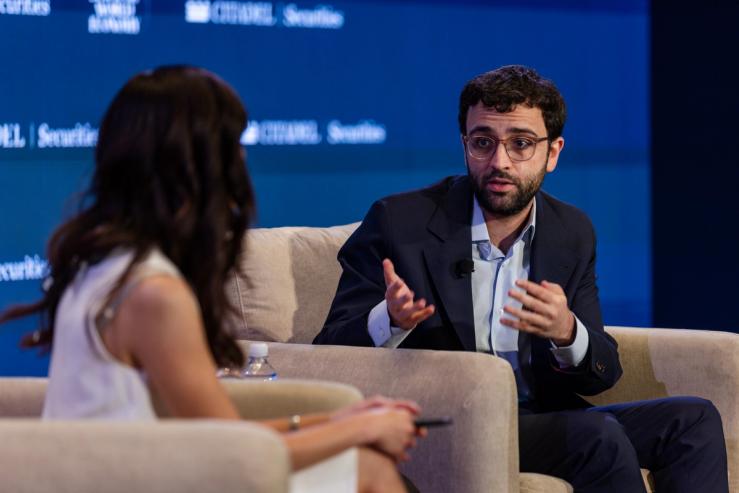
“If you commit insider trading on Kalshi, that can and will at some point be a federal crime. It is a federal crime,” Tarek Mansour said at Semafor World Economy. “I actually do expect the DOJ to prosecute some of these cases,” he added.
Prediction markets like Kalshi and rival Polymarket have been facing public outcry over concerns about insider trading, spurred by large, suspiciously timed bets on public events.
The concern is that people who already know the answers to questions — for example, how many times US President Donald Trump will visit his Mar-a-Lago estate in April, or when SpaceX will announce its IPO — might trade on those markets, and make an easy buck. Companies have been slow to catch up and implement their own rules preventing it, Semafor reported last month.
Mansour said Kalshi’s view is that insider trading “should absolutely be banned.”
“We can impose fines all the way to criminal prosecution,” he said. “We’ve released some cases. There’s more coming. But over time, it’s going to be a bit of a chicken and the egg. There’s always going to be bad actors. The goal is to just squash them, like find them and deter them.”

Know More
CNN reported last month that federal prosecutors are exploring whether certain bets on prediction markets have violated insider trading laws.
Mansour also called for a federal consumer protection-focused framework for prediction markets, rather than a state-by-state patchwork that has “failed.” Of 34 states with legal sports betting, for example, only one bans marketing to problem gamblers, he said.
The federal government this month sued three states, challenging their attempts to regulate prediction markets.