




The News
A sweeping jihadist offensive across Mali is raising concerns in Washington about the security of the US embassy in Bamako and the safety of Americans in the West African nation.
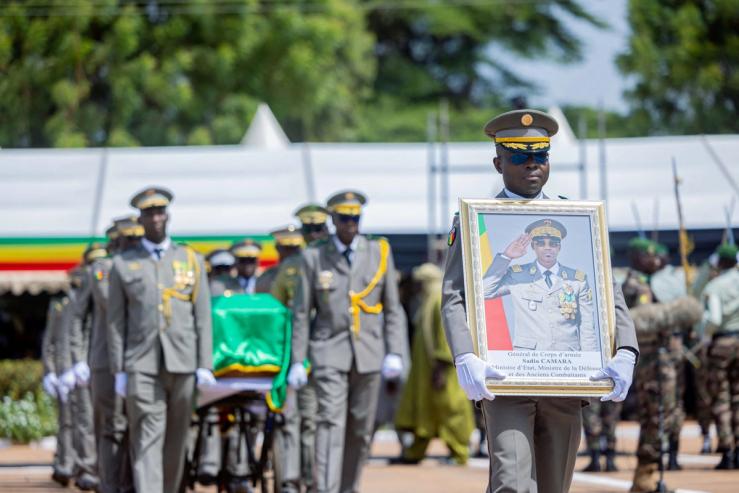
Last month, Al Qaeda-affiliated group Jama’at Nusrat al-Islam wal-Muslimin, or JNIM, and the separatist Azawad Liberation Front, or FLA, launched simultaneous attacks across the nation in an offensive that has continued into May. The Malian defense minister was among those killed in the initial attacks after a suicide truck bomber targeted his home near the capitol Bamako.
The scale and coordination of the attacks has raised urgent questions on Capitol Hill about the stability of the military junta that has governed Mali since 2021, sources told Semafor. The embassy in Bamako remains open but Mali is under a Level 4 “Do Not Travel” advisory — the State Department’s highest warning. US officials are also working to free Kevin Rideout, an American believed to be held hostage somewhere in Mali or Niger.
Senate Democratic aides told Semafor they are pressing for answers from the State Department about embassy operations and US strategy in the country, expressing concerns about whether Mali’s government would withstand the current episode of violence. Democrats are also looking for guidance about who the Trump administration is engaging with in the military junta.
“My guess is you’re not going to see black flags flying over Bamako tomorrow. But I can’t promise by next week,” Nathaniel Powell, a West Africa analyst at Oxford Analytica and research associate at Lancaster University’s Centre for War and Diplomacy, told Semafor in an interview.
A State Department spokesperson declined to discuss details of security or staffing the embassy in Bamako, but said the department “is always vigilant and continually reviews its posture at embassies and consulates throughout the world in line with its mission, the local security environment, and the health situation.”
In this article:

Know More
The attacks land at a delicate moment for US policy in the Sahel. The Trump administration has been quietly rebuilding ties with Mali’s junta as part of a broader effort to warm relations with military-led governments across the region — and the Rideout case has reportedly been central to the US desire to renew ties.
The State Department spokesperson called his return “a top priority in the Sahel.” As part of the outreach, the administration in February removed sanctions on senior junta officials linked to the Russian mercenary group Africa Corps. But when pressed at a Senate counterterrorism hearing, administration officials could not say what the US received in return even when asked about the overflight rights that the US reportedly sought in the search for Rideout.

Room for Disagreement
Still, experts doubt that militant groups would go as far to directly attack US outposts, even as they acknowledge the junta has been severely weakened. Franklin Nossiter of the International Crisis Group told Semafor that JNIM is unlikely to directly target the US embassy in Bamako.
“JNIM has tried to put pressure on Mali’s international partners but the US is not top among them, and they haven’t done that by doing high-profile attacks,” Nossiter said. “If they’re not even doing that with Mali’s main allies, why would they turn around and do that to the US?”
The more acute worry, he said, is what happens if the regime fully collapses — a scenario in which he said “ambient chaos” could make anything possible, as it did in the 2012 coup’s aftermath.
Powell said what comes next is impossible to predict. “Anyone who thinks they have a clear idea what’s going to happen next is a prophet or they’re making things up,” he said. Powell also noted that JNIM likely marshaled a large share of its regional strength for last month’s attacks and cannot sustain that intensity indefinitely.

Notable
- The United Nations high commissioner for human rights expressed concerns about the “worsening human rights situation” in Mali earlier this week, pointing to “gravely concerning reports of extrajudicial killings and abductions, allegedly carried out by members of the security forces” following the April attacks.