




David’s view
If you’re running for office right now, the future is a dangerous place to be.
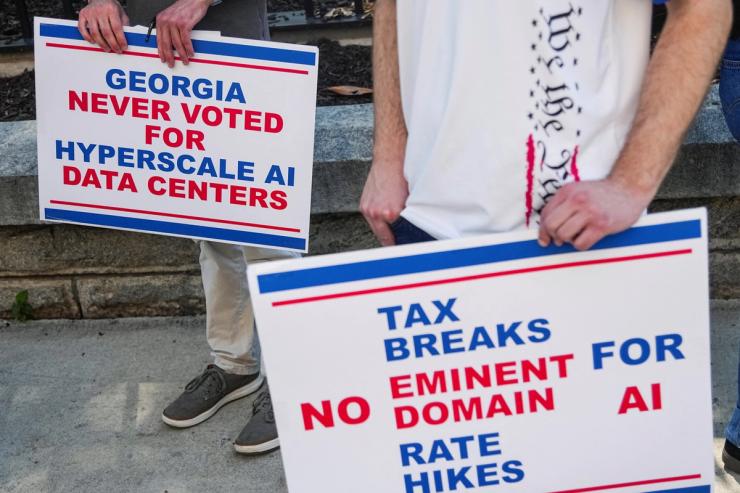
The backlash against hyperscale data centers has converted both Democrats and Republicans into AI skeptics, warning that the industry’s rise risks robbing communities of autonomy. The populist rage against Flock and its AI-powered license plate cameras, while smaller in scale, is a growing offshoot of this bipartisan rebellion.
“We should be very wary of” any tech that promises to support “an ongoing database of the location of every American citizen.” said William Lawrence, the progressive Democratic nominee for a battleground House seat in mid-Michigan, whose anti-data center campaigning set the tone for other candidates. “This whole premise is profoundly un-American.”
In San Francisco, a bipartisan team of attorneys general sued Meta for alleged “known harmful features” that, they argued, addict children to social media; Meta settled the case, promising new safety tools for children, after insisting that they had plenty of tools already. In Tennessee, Sen. Marsha Blackburn is running for governor on a promise to stop cell phone use in schools “from bell to bell” — one of the only ideas she shares with New York Gov. Kathy Hochul.
It’s a marked shift from past campaigns where votes were courted with talk of the benefits of a high-tech future. Candidates once ran on rural broadband that they said could give every voter the same internet access that urbanites enjoyed, plus laptops on the desk of every public school student.
That enthusiasm is missing in this year’s elections. The lack of a unified Democratic agenda, and the president’s usual reluctance to stay on message, has obscured the trend running under everything. Voters have grown more nervous about their futures and more nostalgic about what they’ve lost.
“Even if you are living where your forefathers have lived for generations,” wrote the tech skeptic Paul Kingsnorth last year, “you can bet that the smartphone you gave your child will unmoor them more effectively than any bulldozer could.”
Voters want to slow things down. Democrats and Republicans are offering them different ways of doing that.
The Trump administration has taken joy in rolling back the renewable energy spending of the Biden administration, stopping wind and solar farms and pushing the auto industry back from its embrace of EVs and greater engine efficiency. Job growth is slower than it was under Biden; they sometimes describe that as cause for celebration, too.
“After the deportations that we have seen during President Trump’s administration and the closing of the border… we don’t need to produce as many jobs,” Treasury Secretary Scott Bessent explained to CNBC last week.
But more voters feel like they’re losing out, and that the industries driving growth right now have made their lives worse — to say nothing of their kids.
Where is the techno-optimism? Not in any of the campaigns. The crypto industry has spent tens of millions of dollars to elect a “pro-crypto Congress,” but its ads don’t try to sell voters on the importance of crypto.
And ads paid for by the prediction market and gambling industries don’t tout the virtues of those industries. They are, universally, about the issues that voters care about — or that pollsters say they care about. Because those pollsters also find that voters are queasy about the explosion of gambling, and don’t see themselves getting rich by holding onto the right digital coins.
Most of the visible voter angst about change is about tech. But some of it is about the cultural change that people argue about, on their phones, with the other angry people that their algorithm has found for them.
The recent elite-level Democratic debate about “Woke 1″ was premised on something real. Liberals were embarrassed about the ways they talked about race and gender in 2020, from the pronouns they plunked into their email signatures to the black squares they posted on Instagram.
What they were really embarrassed about was their radical, temporary optimism about how that year’s crises would transform the country. The pandemic was going to convince people of the need for universal healthcare; the murder of George Floyd would tear down the carceral state; the end of the Trump administration would reopen the border for millions of asylum-seekers.
Democrats now agree that they promised too much change, too quickly, and that Republicans benefited from the backlash. Anti-vaccine activists won the COVID wars; mass deportation advocates came back with more momentum than they’d had in 100 years.
Democrats now talk about immigrants as “neighbors” who deserve to stay here, not as more aspiring Americans who should be let in to enrich and transform the country.
This is just not a year to tout transformation. The electorate is looking for candidates who’ll protect what they have — jobs, homes, time — and not imperil it in the name of growth or progress.
In this article:

Room for Disagreement
One massive exception to this anti-tech mood among Republicans: Industry stocks have surged since Trump took office.
Any voter who owns them, individually or in an index fund, is doing better than he was before the new “golden age of America.”

Notable
- In his The Midterms, Actually newsletter, Astead Herndon looked at why both parties were taken by surprise by the data center backlash. “People don’t want to feel like they’re guinea pigs in an experiment, and it’s not just Sam Altman who has contributed to that feeling. It’s also the politicians who have treated technological change as something they retroactively legislate after a crisis arrives.”
- For Politico, Gabby Miller and Owen Dahlkamp talked to AI industry insiders about the ways they’re responding to political rage. “Now some of Silicon Valley’s biggest dogs are entering the fight.”
- In his Slow Boring newsletter, Matthew Yglesias shared his own theories on why people aren’t happier about technological progress.