




The News
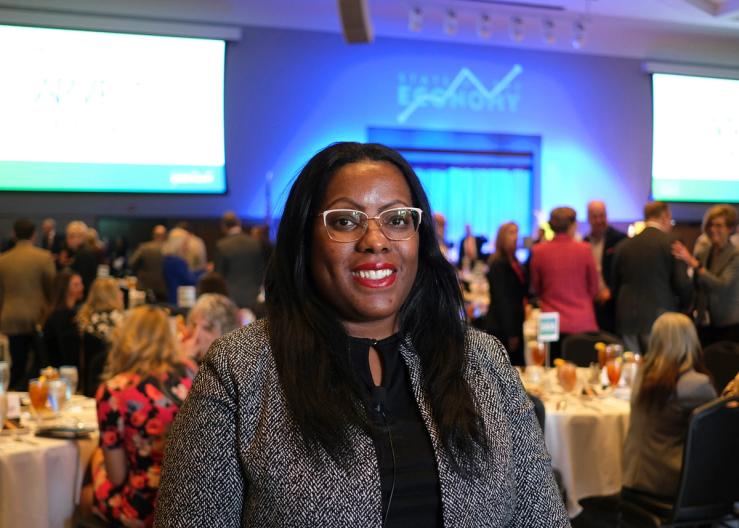
Consumer sentiment among Republicans and independents is “starting to fade” ahead of the midterm elections, The Conference Board Chief Economist Dana Peterson told Semafor.
The Conference Board said last week that its overall consumer confidence index had dropped to its lowest level since January. Economists had predicted it would remain higher.
“There’s just a general shift of downward optimism,” Peterson said on the sidelines of the Kansas City Federal Reserve’s annual economic policy symposium, pointing to expectations that inflation and interest rates will remain elevated.
“Democrats are the least optimistic, but I’ve noticed that more recently the independents are moving with Republicans” in a negative direction, she continued. Consumers have been citing issues like “oil and gas prices, food, and also war and conflict” on surveys.
Peterson predicted that Warsh would not support an interest-rate hike at next month’s Fed meeting, saying that “the risk is that there’s more demand destruction that leads companies to either cut prices or cut labor.”
She also said that “it would be good” if Fed Chair Kevin Warsh “reinforce[d] the fact that the Fed has been given its independence by an act of Congress” amid President Donald Trump’s renewed attempt to fire Fed Gov. Lisa Cook.
And she expressed concerns that any coordination with the Fed on the Treasury Department’s moves to bring down borrowing costs by buying US long-term debt might jeopardize the central bank’s independence.
It raises the question of “who should have the greater authority over the economy: Is it the Fed, with its short-term interest rates and its balance sheet? Or is it the Treasury and its ability to buy and sell Treasury assets to rebalance markets? It’s really not clear,” Peterson said. “It’s also: Well, should they be communicating or not? And does that sort of communication erode Fed independence?”

Know More
This transcript has been edited for length and clarity.
Eleanor Mueller: What did you make of Warsh’s speech this morning?
Dana Peterson: “Warsh said some very familiar things in terms of seeing the labor market as steady, but also the fact that inflation has been above the 2% target for so long as unacceptable. He also did provide a little bit more information on how he viewed the economy and indicated that there’s still this uncertainty out there, political uncertainty, as well as at least three more inflation reports that may influence what happens next at the Fed. So 50-50 hike-hold makes sense to me, because there’s still some vulnerabilities in the economy, like erosion of demand among consumers in sales data and PCE data that was just released. Consumers are definitely shifting from discretionary to necessary products and services, which could be the beginning of the cycle where consumer demand contracts so much that the Federal Reserve realizes, ‘OK, maybe we shouldn’t be restricting policy that much. Maybe it needs to be looser, or we’ll just sit tight.’”
Eleanor Mueller: Do you think Warsh might support a rate hike next month?
Dana Peterson: “I don’t think so. Markets do, and I guess that’s important because the Fed is looking for signals from markets. But again, I think that we’re seeing this slowing in inflation plus declines in prices for some of those more expensive discretionary items like new cars. That’s pushing inflation down, and I believe that’s going to continue to do so. But it’s going to take a while to get to 2% and measures including initial jobless claims, continuing claims, JOLTS, all indicate that the labor market is okay. But the risk is that there’s more demand destruction that leads companies to either cut prices or cut labor.”
Eleanor Mueller: Were you surprised Warsh didn’t reference Treasury Secretary Scott Bessent’s efforts to buy back more of the US’ debt?
Dana Peterson: No, “because his remit is monetary policy, and the Treasury has fiscal policy, but it does leave in the atmosphere the key question of who should have the greater authority over the economy. Is it the Fed, with its short-term interest rates and its balance sheet? Or is it the Treasury and its ability to buy and sell Treasury assets to rebalance markets? It’s really not clear. It’s also: Well, should they be communicating or not? And does that sort of communication erode Fed independence?”
Eleanor Mueller: Given the president’s renewed effort to oust Fed Gov. Lisa Cook, do you think Warsh should have explicitly mentioned Fed independence?
Dana Peterson: “I think that could have been a part of the conversation, to reinforce the fact that the Fed has been given its independence by an act of Congress, and until Congress says otherwise, then the Fed should operate in that way. I think that it would be good if he speaks along those terms. All in all, the Fed should not be influenced by fiscal policy or politics, because their remit is financial stability.”
Eleanor Mueller: What has your work on consumer confidence revealed about how US voters are feeling headed into midterms?
Dana Peterson: “We do ask about confidence by political affiliation, and Democrats are the least optimistic, but I’ve noticed that more recently the independents are moving with Republicans, and their sentiment is starting to fade. So ahead of the elections, the trend is suggesting that consumers are less optimistic,” including about inflation and interest rates. “They continue to say that they’re very much focused on cheaper, less expensive goods and services, and if they do splurge on anything, it’s the cheaper version. So instead of going to the movies, they’ll stream. People are citing price levels, including by mentioning oil and gas prices; food; and also war and conflict.
Eleanor Mueller: Leaving here, what’s one thing you think people should be paying more attention to?
Dana Peterson: “Structural drivers of inflation. Some of the things we’re seeing are cyclical. But there are key things that are going to put upward pressure on inflation, besides tariffs and the oil price shock and the commodities supply chain shock that is flowing through now. That includes demographics, right? Warsh mentioned that he doesn’t see anything troubling in wages in terms of inflation, but that’s something to watch, as well as labor shortages, retirement populations, climate risk and natural-disaster risk.” On top of that, “the increasing levels of conflict is prompting governments to shift towards spending on defense as opposed to infrastructure,” at a time when “we definitely need that continuous investment that will ultimately turn into stronger future productivity.”

Notable
Warsh on Friday delivered his fullest account yet of how he views the economy — but his previous remarks are sowing doubt that he’ll back his hawkish lean with action next month, Eleanor reports.