




The Scoop
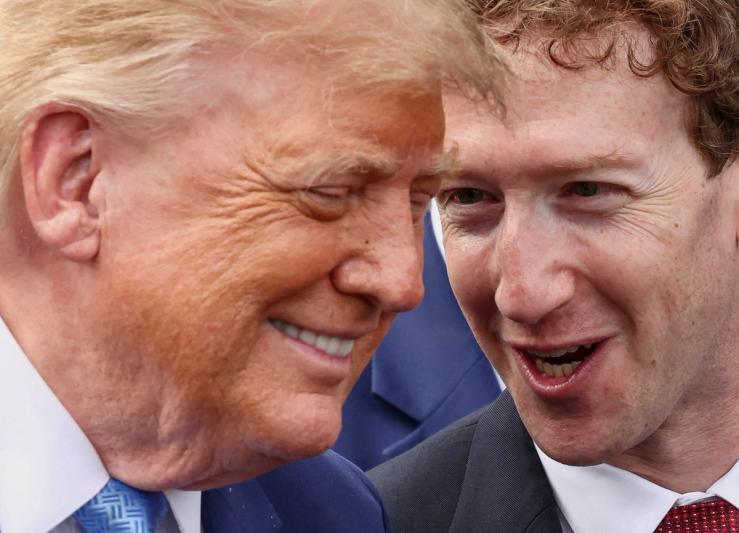
The idea for what became President Donald Trump’s Tuesday pact with the AI industry came from a conversation between Meta CEO Mark Zuckerberg and House Speaker Mike Johnson at last week’s state dinner, a source familiar with the matter told Semafor.
Zuckerberg spoke to Johnson — whom he was seated next to at the dinner for Chinese leader Xi Jinping — about regulatory concerns around AI, according to the source. The Meta CEO then talked to Nvidia CEO Jensen Huang about crafting a set of principles that tech executives could use at their next meeting with Trump, the source added.
Zuckerberg then circulated a draft ahead of Tuesday’s meeting between Trump and AI executives. Huang played a role gathering support for it among the administration’s guests, which included executives from OpenAI, Anthropic, xAI, and others. Eventually Trump himself released the document as a “White House Accord on Super Intelligence,” outlining broad principles for self-regulation.
The Trump administration and the industry executives who gathered on Tuesday hailed it as a historic concord among rival companies that signaled the industry wants to act responsibly, though it’s not clear that the gesture will quell broad public concerns about safety.
Zuckerberg’s central role in shaping the document, confirmed by two other sources familiar with the matter, indicates that his cultivation of Trump has paid off. It also suggests that his political clout can rival that of the free-spending Musk and Huang — who recently made headlines by speaking to the president onstage at an industry conference.
Meta did not comment for this story. The White House did not return a request for comment.
In this article:

Know More
The accord, signed by Meta, OpenAI, Anthropic, xAI, Google, and NVIDIA, lays out a commitment to “robust internal controls” and outside audits designed to ensure the safety of frontier AI models. Some of those models abide by a voluntary clearance by the government under a framework established by a Trump order on AI, though that framework was never released to the public.
At just over 300 words, the agreement doesn’t get into significant detail about what those industry-run safety controls might look like in practice. The agreement also hints that federal AI regulation may be needed in the future.
Zuckerberg described it as “good steps forward” on Tuesday.
“The idea isn’t that this is the only thing that we will ever do. It is that this is a start and an accord that the whole industry could come to,” Zuckerberg told reporters outside the White House Tuesday, appearing next to Trump, House Speaker Mike Johnson and others who attended the meeting.

Ashley’s view
Zuckerberg survived the “techlash” relatively unscathed in Washington following the 2016 presidential election, only after years of being yelled at by both parties in Congress. He testified multiple times on everything from election interference via Facebook ads to kids’ online safety, along with playing key roles in battles over privacy and content moderation.
Meta later faced a lot of litigation, from both the federal government and private actors. The company dealt with the brunt of Big Tech animosity before AI companies ever even had offices in Washington.
Things have shifted now. Meta’s even been forgiven by the right for kicking Trump off the platform following the Capitol riot. With the benefit of hindsight and experience, Zuckerberg knows how to skate where the puck is going politically; he’s trying to position Meta as willing to work with the government and disinterested in excessive regulation.
It’s a strategy that’s working — with this president.

Notable
- Meta is currently seeking to boost its place in the business AI market via its new Muse agent, per The Wall Street Journal.