




The Scoop
A flood of paid, unlabeled influencer marketing and AI-produced political ads has prompted a Senate Democrat to look at new restrictions on political advertising online.
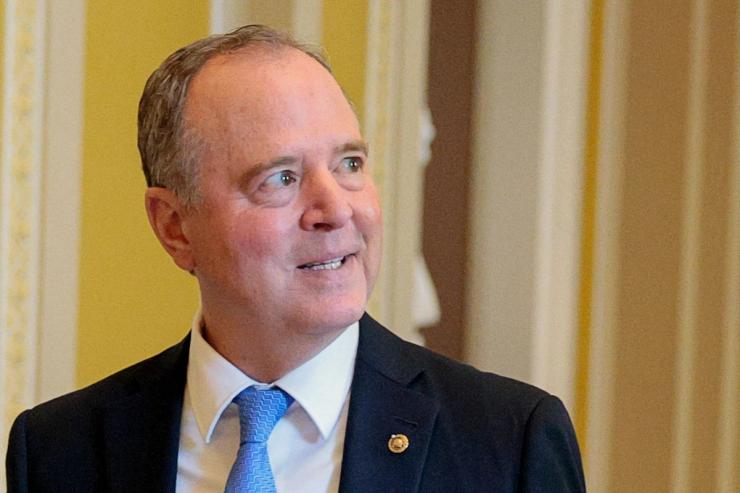
On Monday, California Sen. Adam Schiff plans to introduce two new bills that would attempt to illuminate who is paying influencers for political speech online and restrict AI-generated likenesses of politicians.
The Promoting Authenticity with Influencer Disclaimers Act would amend the Federal Election Campaign Act to require labels on some posts from influencers paid for by political committees. If passed, the legislation would mandate “audiovisual or audio-only content” explicitly state whether it was paid for by a political committee.
The second bill, the AI Ads Act, would prohibit what Schiff’s office described as “fraudulent misrepresentation of political candidates or committees through content generated by artificial intelligence.” The bill, which Schiff first introduced as a member of the House of Representatives in 2024, would update existing rules that ban impersonation of candidates to include AI-generated content, and would tighten restrictions around damaging fraudulent content.
In this article:

Know More
The bills are Schiff’s reaction to ad spending in two recent primary contests in his home state.
The first was the Democratic gubernatorial primary, which featured millions in paid spending for posts from news influencers, largely paid for by billionaire Tom Steyer’s campaign. California’s unique digital disclosure rules, which Schiff’s proposed legislation would mirror at the federal level, showed the extent of Steyer’s payments, with some news influencers racking up hundreds of thousands of dollars for supporting Steyer online.
The second was the race for Los Angeles mayor. Republican Spencer Pratt ran a viral yet ultimately unsuccessful campaign that relied in part on a flood of quick-turn AI-generated video ads.
“California’s primary this year made a clear case that our current guardrails around campaign advertisements are not keeping up with the changing landscape of political speech,” Schiff said in a statement. “Ads are cropping up around the country using completely AI-generated scenes. And everyday influencers have found a growing niche that has the ability to reach more voters than any billboard or even a broadcast T.V. ad.”
“Adding disclaimers to help give voters the full picture and protecting against misrepresentation helps treat these forms of advertising like any other in our landscape, and close a pernicious loophole in our current election rules,” he said.

Max’s view
As the midterm elections kick into gear after Labor Day, Americans’ social feeds will be flooded with political videos. It may be hard to tell which ones are paid partnerships.
As Semafor has reported, an outdated loophole makes paid posts for products more onerous for creators to produce than paid speech for campaigns and politics. The FTC has regularly cracked down on unlabeled advertising on social media, but political videos fall under the purview of the FEC.
Both Republicans and Democrats are well aware of the loophole, and have taken advantage of it, funneling millions of dollars each election cycle to creators and online pundits, who have gladly accepted payment from political or issue-focused groups to create content for their feeds. Increasingly, however, campaigns are taking notice, and aiming to push back.
The PAID Act — the Senate version of a bill from Rep. Mark Takano, D-Calif., introduced earlier this year — complements a different campaign ad transparency bill from Sen. Sheldon Whitehouse, D-R.I., that would require influencers to disclose paid political speech.
The political momentum for reining in (or at least labeling) paid speech on the internet has been generally driven by Democrats. But it isn’t a totally partisan push, either. In Texas, moderate Republicans supported a shift in a state election regulatory process that required influencers paid more than $100 to post on behalf of a candidate to append disclosures.
The AI regulation seems a lot trickier. One challenge facing Schiff’s legislation could be the pace of development of AI tools. These AI tools may soon be so built into creative workflows that it will be almost pointless (or difficult) to distinguish between what is “made” by a human and what isn’t.