



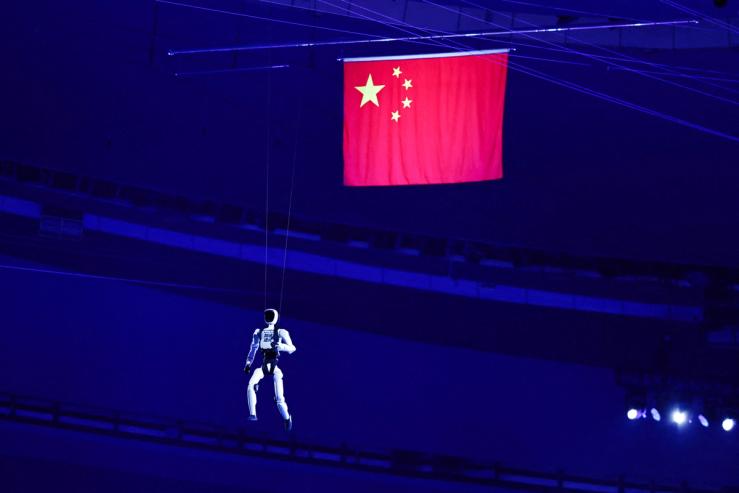

Ben’s view
Analysis of China is often so polarized that a casual observer might get the impression that Beijing is both an unstoppable force on the verge of global domination and a precarious dictatorship on the brink of collapse. That is not an impossible combination, of course. The Soviet Union was an archetypal fragile superpower, its red star burning bright before its dramatic final implosion. But China is a very different case, given its economic resilience, its technological advancement, its lack of interest in exporting ideology, and its reluctance to become entangled in foreign adventures.
So what does China’s trajectory as a global power look like over the next decade? What kind of power will China be? And how fragile is it?
As a think-tank research director, I’ve sat in countless workshops and briefings with politicians, officials, investors, and wonks grappling with questions such as these. Most of the time, people come with their pre-existing views and biases, repeat them out loud, close their minds to alternative perspectives, and go home even more sure of their ways.
To move beyond these limitations, at Chatham House, we’ve been trying to corral bright minds on China and Asia’s other rising powers to engage with a new way of thinking about the future: back-casting. It’s the inverse of forecasting, where you start in the present and look forwards. With back-casting, you begin with a hypothetical future scenario — often a highly desirable or highly undesirable one — and then work backwards to ask, “How did we get here?”
Attempting to shed light on what kind of global power China might become, we brought together around 20 experts from government, business, and academia and presented them with a picture of China as a peerless technological-economic superpower in 2036.
In this scenario, which most participants thought highly plausible, Beijing has taken advantage of a faltering US and a divided Europe to parlay its dominance in manufacturing, robotics, and AI into unrivalled geopolitical power. It has recycled vast profits to buttress its global leadership ambitions, rebalancing international rules and institutions in its favor.
When we discussed the hurdles to China’s progress, policymakers reeled off a long list of challenges: an aging population, local government debts, the ailing property market, youth unemployment, over-centralization of power by Xi Jinping, and the failure to establish a clear succession plan for the Communist Party.
This is standard fare for China watchers. What was unusual was when we pressed participants about whether these problems were really so serious and intractable that they could halt China’s rise over the next 10 years: Apart from a few dissenters, most of our participants thought that China could, in fact, rely on its economic and technological engine to ride out these storms.
Advanced robotics and a rapid rollout of AI should counter the shrinking workforce, while creating enough new jobs to keep youth disaffection at bay. China’s dominance of global manufacturing should keep the foreign exchange flowing in, allowing Beijing to manage bad debts in the property and local government sectors. And, despite some disquiet at Xi’s massing of power and reluctance to lay out a succession plan, the Party seems sufficiently institutionalized and united around key objectives to navigate some future turbulence in leadership transition.
In sum, China’s immense scale, national unity, deep political control, and increasingly cutting-edge technology may well allow it to sustain superpower status, even if it fails to resolve long-standing structural difficulties.
In some ways, this should not be so surprising: Although geopolitical analysts love to talk about turning points, crossroads, and dilemmas, many governments have a prosaic tendency to defy these dramatic predictions and muddle through.
So what can be done? Our scenario was predicated on the US continuing to turn inwards and failing to cooperate effectively with its network of allies in Europe and Asia. We also assumed that Europe would not get its collective act together.
Policymakers and voters in the US, Europe, and Asia have the power, collectively, to change this. In Washington, it is a truism that the only thing Congress can agree on is strong pushback against China. But, notwithstanding President Donald Trump’s many about-turns on China policy, in the medium and long term, the US cannot shape China’s prospects without the help of its allies.
The tightening of the vise around Taiwan, China’s chokehold on rare earths, and Beijing’s leaps forward on AI, semiconductors, and robotics have not been the wake-up calls they should have been. What the US and its allies need is another “Sputnik moment,” where Beijing shocks them into action by some spectacular feat of innovation, perhaps developing a cure for an intractable disease, developing globally dominant AI applications, or unveiling solar-powered data centers in space.
Ironically, it may take more successes from Beijing to snap Europe and the US out of their complacency, in the case of the former, and self-centricity and self-harm in the case of the latter.
Ben Bland is the Director of the Asia-Pacific Programme at Chatham House.

Notable
- Yuan revaluation, enforced through tariffs, may be the only way to prevent China’s “monstrous and growing trade surplus” from swamping the West’s native industries, Greg Ip argued in The Wall Street Journal.