Taipei downplays US arms sales worries, the Quad loses its lustre, China’s memory chips sector soars͏‌  ͏‌  ͏‌  ͏‌  ͏‌  ͏‌ 
 
sunny Beijing
cloudy Hangzhou
cloudy Taipei
rotating globe
May 26, 2026
semafor

China

China
Sign up for our free email briefings
 
China Today
  1. Taiwan ‘optimistic’ on arms
  2. Quad’s downbeat meeting
  3. Xi criticizes Japan defense
  4. Aircraft carrier buildout
  5. Beijing’s ‘modular’ strategy
  6. China memory chip boom
  7. Deepseek slashes prices
  8. Firewall hardware exports
  9. ‘Hot money’ crackdown
  10. Chinese firms look abroad

We watch the China watchers, and dig into a risqué new tour group bucking Confucian clichés.

PostEmail
First Word

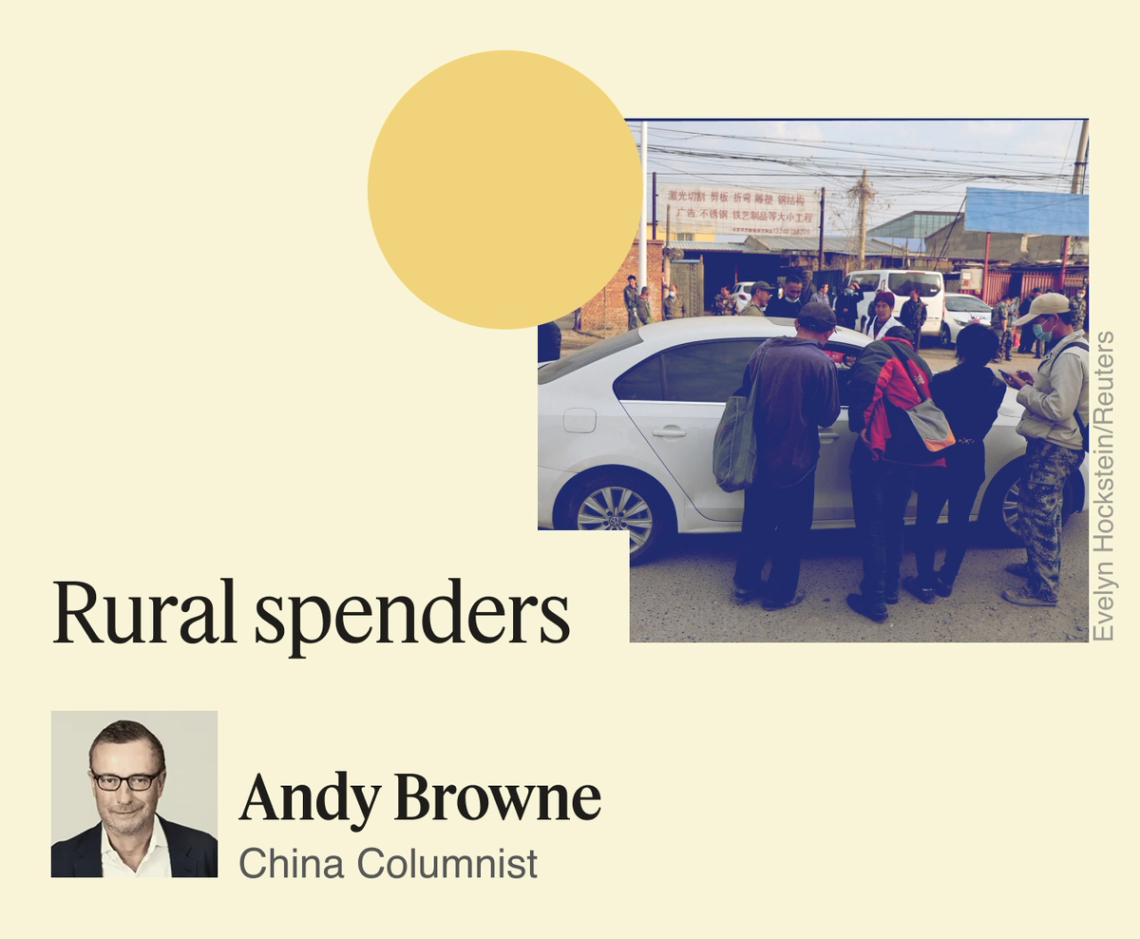
China’s migrant armies built modern Beijing and other megacities, working as scaffolders and welders, carpenters and plumbers, plasterers and painters.

Later, others arrived to sweep the streets, deliver packages, and nanny the children of the rising middle classes.

But this population of rural laborers, now 350 million-strong, is largely excluded from settling with their families in the gleaming urban centers they constructed, and that they now keep clean, safe, and comfortable. That may be about to change, not because the Chinese Communist Party regrets the social injustice — tens of millions of children fend for themselves in villages while their parents travel to cities to find work— but because Chinese leaders are desperate to find a new engine of growth as the economy sputters.

Last week’s move by the State Council, the country’s cabinet, to ease residency restrictions that prevent migrant workers from accessing social insurance where they work is potentially an economic game-changer. It will enable rural families to leave their farms and head to large cities where the best jobs can be found.

In doing so, temporary workers, now big savers, will become permanent urban residents, who will spend.

That, at least, is the theory behind a long-overdue reform of the “hukou” household registration system, a Mao-era holdover that ties rural residents to their native villages. Dexter Roberts, the author of The Myth of Chinese Capitalism told me that “This is exactly what they need to do.” But, he added, “I don’t see it as a heartfelt policy.”

PostEmail
1

Taipei downplays US arms sales concerns

Chart showing select defense spending by Asian countries

Taiwan’s defense minister said Monday he remained “cautiously optimistic” about US weapons sales to the island, after an American military official suggested the deal was on hold to preserve ammunition for the Iran conflict. The US Navy chief’s remarks fueled more questions about President Donald Trump’s support for the self-governing island, which Beijing considers a renegade province. After his Beijing visit, Trump suggested arms sales to Taipei could be used as a “bargaining chip” with China. The deal’s future is further complicated by the prospect of Trump meeting China’s leader at least three more times this year, The Washington Post noted. However, a senior US official told Reuters that such long-term arms sales were unrelated to the Iran war.

PostEmail
2

Quad bloc loses its lustre

Officials from Australia, India, Japan, and the US.
Officials from Australia, India, Japan, and the US. Adnan Abidi/Reuters

A meeting today of foreign ministers from the Quad group showcases how much the anti-China bloc has weakened, experts said. Australia, India, Japan, and the US banded together nearly 20 years ago, holding annual summits that were widely — albeit not explicitly — framed as combating a rising China. But Washington’s tariffs against the bloc’s other members, as well as its war against Iran and efforts to improve ties with Beijing, “have posed questions over the viability of the grouping,” The Hindu’s diplomatic editor wrote. The latest talks, hosted by India, mark the second successive year the group’s leaders will not meet: “The Quad will muddle along but will likely remain in a marginal role,” an analyst wrote in Foreign Policy.

PostEmail
3

China rails against Japan

A chart showing Japan and China’s defense spending.

Chinese leader Xi Jinping reportedly complained about Japan’s increased defense spending in an “intense diatribe” during his recent meeting with US President Donald Trump. Tensions have risen considerably between Beijing and Tokyo since Japan’s prime minister said her country could come to the defense of Taiwan — which Beijing claims as its own — were China to attack the self-ruled island. Analysts say that Beijing’s belligerence, including a massive military display in December and intensifying disputes with other countries, including Vietnam and the Philippines, has pushed regional nations to remilitarize. “As China becomes more aggressive and coercive, Japan will keep expanding its defense apparatus,” an expert wrote in Foreign Affairs.

PostEmail
4

Beijing’s growing military prowess

China’s first domestically built aircraft carrier sails into Hong Kong
Lam Yik/Reuters

China’s armed forces are fast building the country’s fourth aircraft carrier, which experts said showcased Beijing’s impressive industrial base. Details about the vessel are scarce, the Center for Strategic and International Studies said in a post about the secretive project, but progress has been steady. It is very likely to be the biggest of China’s aircraft carriers, and will probably be nuclear powered. Though it is still years from deployment, even on its accelerated construction schedule, the project represents “the latest step in the [Chinese navy’s] rapid modernization drive and underscores Beijing’s continued push toward a larger, more capable blue-water fleet,” CSIS said. That could result in “a sea change in the global balance of military power.”

PostEmail
5

The ‘modularity’ advantage

Chart showing China’s annual renewable energy generation by source since 2000, in TWh

The key to China’s industrial success is its “mastery of modularity,” Oxford University researchers argued. A “modular native,” inspired by the term “digital native,” is a building block designed to be modular from conception; for instance, a solar cell is the building block for a solar panel, as is a container for the shipping industry. Modularity allows for superscaling, unlike “bespokeness” — like handmade shoes — which is slow and complex. China’s superior understanding of this, the researchers proposed, explains its dominance in building everything from renewables and EVs to robots, at speed and scale: “While Americans and Europeans have been repeating … that China cannot innovate, China invented the largest and fastest production and construction machine in history, right under their noses.”

PostEmail
6

China memory chip sector grows

Chart showing iShares Semiconductor ETF and S&P 500 performance across past year

The rise of China’s memory chip sector is creating a geopolitical dilemma for US tech companies. Chinese firms CXMT and YMTC are gaining ground because South Korean and American chip giants can’t keep pace with AI-fueled demand for memory chips, which is driving prices higher. But US firms eyeing new supply sources are wary of turning to China because of Washington’s restrictions on buying chips from the country, The Wire China reported. While one analyst noted “increasing interest in using CXMT memory,” experts fear the temptation could risk making the US “dependent on China for a vital product.”

PostEmail
7

Deepseek slashes prices

Deepseek illustration
Dado Ruvic/Reuters

Chinese AI startup Deepseek made a 75% discount on its flagship model permanent, intensifying an AI price war. Chinese labs are increasingly looking to compete with their global peers for customers, and cost is a big part of the equation: DeepSeek’s offering is more than 10 times cheaper than OpenAI’s. As American companies make an aggressive push into enterprise, selling their products to businesses, several firms have started saying AI spend is squeezing margins. As with other Chinese industries, major AI players are betting that “victory does not require producing the most advanced commodity, but producing a good-enough commodity at structurally lower cost until the opponent’s premium pricing model loses its market sustainability,” two Taiwan-based experts wrote.

PostEmail
8

Iran uses Chinese censorship tech

Iranian internet user at home
Majid Asgaripour/WANA (West Asia News Agency) via Reuters

Iran is using Chinese hardware to strengthen its censorship capabilities, further proof that Beijing is exporting the technology that powers its cutting-edge firewall. Since the start of US-Israeli attacks in February, Tehran has essentially cut Iranians off from the web, reshaping the country’s economy in the process. Authorities now plan to use hardware imported from China to permanently restrict access to the internet, allowing only tightly monitored access for a small number of users, RFE/RL reported, citing Iranian state media. The latest moves come after WIRED reported last year that a Chinese company with close ties to state censors was selling its wares in Ethiopia, Myanmar, Kazakhstan, and Pakistan. “This is very frightening,” one researcher told the outlet.

PostEmail
9

Cross-border trading crackdown

A screen displays the closing Hang Seng Index at Central district, in Hong Kong
Tyrone Siu/Reuters

Worried about “hot money” outflows, Chinese regulators are cracking down on illegal cross-border stock trading. The move — in which officials have targeted brokerages offering investors an easier and cheaper way to get capital out of China than through official channels — has already hit Chinese mainland companies listed on overseas exchanges. It is also likely to ricochet through Hong Kong’s booming market for IPOs, though a Citic Securities analyst said the rule’s short-term impact on the Asian financial hub was “manageable.” Experts say the crackdown is partly intended to give Chinese authorities greater visibility into overseas stock trading by Chinese nationals so they can tax profits amid a slump in government revenues caused partly by a real estate crash.

PostEmail
10

Reshaping global consumption trends

Shoppers walk out of a luxury store at Tsim Sha Tsui district in Hong Kong, China
Lam Yik/Reuters

A dual dynamic in China’s consumer goods sector is reshaping the global landscape. Chinese companies, facing brutal domestic competition, a slowing economy, and deflationary pressures, are increasingly acquiring foreign consumer brands: Fast fashion giant Shein is buying “sustainable” US clothing label Everlane, and upscale American café chain Blue Bottle was recently sold to Luckin Coffee. In the first quarter of 2026, China saw $2.4 billion in outbound consumer goods deals, largely in Europe and North America, the Financial Times reported. Meanwhile, Chinese consumers, riding a wave of nationalism and confidence in domestic products, are shunning Western legacy brands in favor of homegrown luxury ones, The New York Times wrote, eroding the dominance of European powerhouses like Porsche and Cartier.

PostEmail
Watching the China Watchers

Every week, we dig through China-focused newsletters and podcasts, and bring you key takeaways from the Sinologist community.

  • Attempting to truly understand China as an outsider is a “never-ending quest,” as government restrictions and a “deepening culture of paranoia” within Chinese academia have made it more difficult for scholars to do deep research on China. — Sinocities
  • A screenshot going around the Chinese internet appears to show the country’s top court stating that discriminating against one’s sexual orientation is unlawful. The screenshot seems to be credible, but its authenticity wasn’t independently confirmed; it wouldn’t mark a formal policy change, but is notable nonetheless. — Pekingnology
  • The commodity price shock from the Iran war is benefiting one niche Chinese industry: excavator manufacturers. The sector is raising prices for the first time in years, after brutal competition weighed on profits. The dynamic could play out in other involution-plagued industries. — Trivium China
PostEmail
Flagging
  • Hong Kong International Airport opens an expanded terminal on Tuesday, as it looks to ramp up its status as a regional transportation hub.
  • The IISS Shangri-La Dialogue, the annual Asian defense conference, kicks off in Singapore on Friday against the backdrop of the Iran war and heightened regional tensions in Asia.
  • Serbia’s president concludes a five-day visit to China on Thursday, the latest European leader to make the trek to Beijing.
PostEmail
Curio
Tan Chun Feng performers.
China Insider/Facebook

A troupe of shirtless male dancers is the hottest new touring attraction in China’s second- and third-tier cities. Tan Chunfeng, or “Sighing at the Spring Breeze,” has sold out theaters across the country, performing to almost-entirely female crowds. The dancers peel off layers of silk robes while performing classical choreography to the audience’s screams, Denmark-based journalist Chu Yang wrote in Northward Seaside. The scenes reveal pent-up “desire” among Chinese women, bucking the narrative that they are “constrained by censorship and Confucian expectation; their desires are managed, supervised, and where necessary suppressed.” The show has raised some eyebrows, but Tan Chunfeng gets away with its more risqué elements by cloaking them in Tang dynasty imagery and history.

PostEmail
Semafor Spotlight
Semafor Spotlight graphic

The Scoop: Saudi Arabia’s NEOM has delayed work on planned 170-kilometer long dual skyscrapers until at least after 2030 as the kingdom’s sovereign wealth fund shifts spending toward ports and data centers. →

PostEmail