




The Scoop
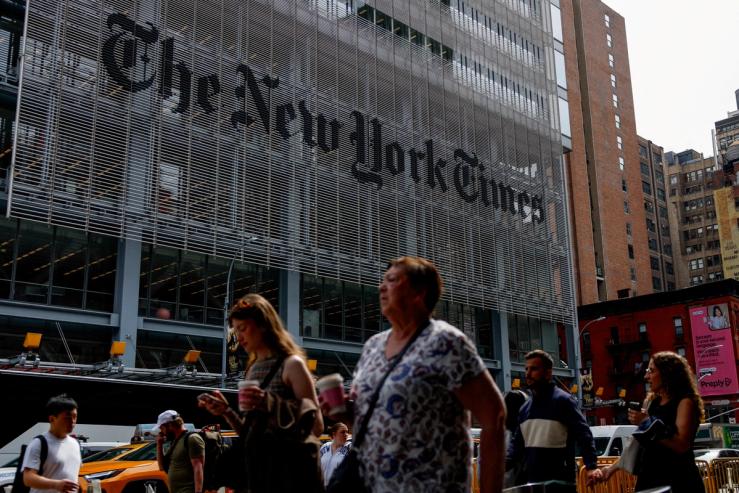
Apollo founder Leon Black’s career started falling apart in October of 2020, when The New York Times revealed that he’d been one of Jeffrey Epstein’s main financial patrons, relying on the criminal long after others had abandoned him.
The veteran finance writer Bill Cohan’s new 673-page Black biography, Money to Burn: The Unvarnished Truth About Leon Black, Apollo, and the Rise of a New Wall Street, offers a very different narrative of a brilliant finance pioneer laid low by a combination of lust and naïveté — but not by any serious complicity with Epstein in his darker schemes. Cohan told me he views it in part as a rebuttal of a strain of Times reporting he referred to in an interview as a “Leon jihad.”
“Leon’s like the Saint Sebastian of Wall Street — he’s got more arrows in him than Saint Sebastian,” he said. “The FT has gone after him, the Times has gone after him, Airmail has gone after him.”
Indeed, Cohan’s book has opened a bit of a religious war between the journalist, whose interviews with Black were first published in Puck, and the Times.
Times journalists David Enrich and Matt Goldstein, who have broken a series of defining Epstein and Black stories and are at work on a book on Epstein’s ties to Wall Street, spoke with Black’s representatives last week and, among other things, “laid into” Cohan and their treatment in Cohan’s book, according to Cohan and others familiar with the exchange. Cohan devotes a chapter to text messages Goldstein exchanged with one Black accuser, and one of the Timesmen complained Cohan hadn’t given them a chance to respond before publication to their depiction; Cohan notes that, in the course of reporting, he did talk to Goldstein.

Know More
The larger dispute is around how to see Black, who shaped what is now a private equity-dominated American financial landscape.
“I just listened and heard him tell his story — and believe me, I would have loved to be the one to refute what he said, but I haven’t been able to,” Cohan said. In his view, the Times journalists are “frustrated Leon won’t talk to [them] — but they haven’t been very nice to him, so I don’t know why he would.”
Times journalists, in turn, are incredulous that Cohan’s book leaves out Epstein’s role, which they reported this March, in helping Black figure out how to pay out part of $20 million “to a dozen women, at least some of whom he’d had sexual relationships with,” according to the recently released files and notes taken by congressional investigators and shared with the Times. Epstein was involved in figuring out ways to dispense a significant portion of that money.
House Oversight Chairman James Comer is currently attempting to force Black to explain some of those payments, and Sen. Ron Wyden, D-Ore., suggested in a letter to Black that his activities might constitute “money laundering,” all of which Black denies. (Cohan notes that this slice of news broke late in the book-publishing process.)
“The New York Times covered Leon Black fairly and accurately, and the reporting has stood up through all the Epstein revelations that followed,” Times spokesman Charlie Stadtlander said. The Times’s Andrew Ross Sorkin, coincidentally, is interviewing Cohan at the 92nd Street Y September 9.