



The Scene
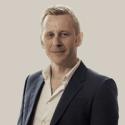
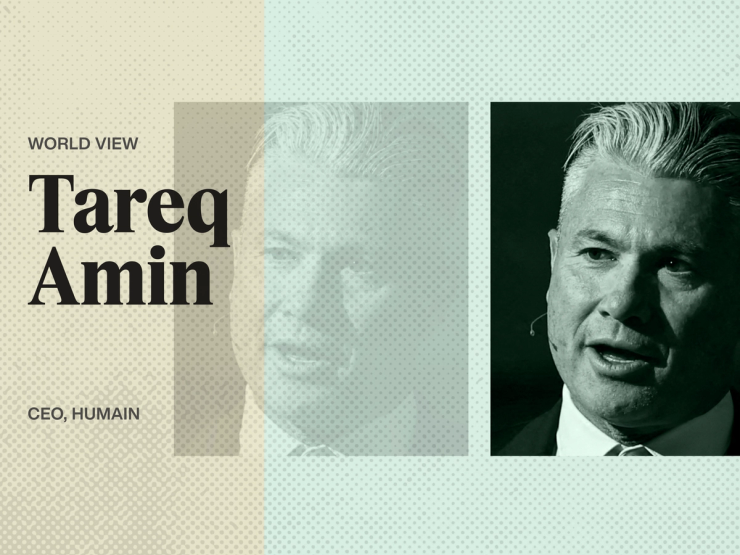
HUMAIN CEO Tareq Amin recognizes Saudi Arabia’s latest effort to transform its economy for what it is: an audacious bet that it can join the US and China as a global AI superpower.
Ahead of US President Donald Trump’s visit to the Kingdom last year, the Jordanian-American tech executive helped launch the state-backed AI company under Saudi’s Public Investment Fund. The plan was to use the Kingdom’s cheap energy, vast land, and sovereign billions to become one of the world’s largest compute hubs.
Amin, who previously led Saudi Aramco’s tech arm, clocked an early win with a well-timed $3 billion investment into Elon Musk’s xAI before it was folded into SpaceX ahead of its historic IPO. Now, HUMAIN has plans to launch a large venture capital fund and expand significantly with offices in the US, France, and the UK, in order to “accelerate the pace of investment,” Amin said in an interview.
It also wants to reduce its reliance on the kingdom’s sovereign wealth fund, its largest shareholder, open up to more global investors, and position itself as a sort of “Switzerland” for open models that sidesteps the dueling ambitions of the US and China.
Here’s how Amin is thinking about what’s next for HUMAIN:
This interview has been edited for clarity and brevity.
Matthew Martin: How much external financing have you raised so far?
Tareq Amin: My goal is to be 30-70 — 30% shareholder financing and 70% third party. We’re not there yet, but I’m getting close to it,. I would love nothing else but to open HUMAIN to the rest of the world and say this is a great place to invest, a great company to invest in.
The story that we talked about a year ago was a PowerPoint, it was a vision. Today it’s no longer a vision, nor a PowerPoint. People can see it with their own eyes and understand the value proposition of what we offer. When you offer predictable energy tariff rates, an abundance of land, low-cost energy, and a [total cost of ownership] that is one of the lowest in the world, it becomes a no-brainer to start looking seriously at investing here.
What are your capital requirements?
I can’t tell you the exact number, but you could assume today an average build of $11 to $12 million per megawatt is what the industry builds on for [data centers]. What we’ve declared is a build towards 3 gigawatts, and you could really stipulate how much capital we need. [Reader note: That would be more than $30 billion.]
Our business model is a mix of multiples. On one hand, we do build-to-suit for hyperscalers and they purchase the GPUs. On the other hand, I’m really accelerating our AI inferencing, which is endpoint APIs to sell frontier models in our marketplace. So, yes, it is capital-intensive. But for third-party financing, I am extremely pleasantly surprised that we have large companies such as Blackstone that have committed to put $3 billion, and many others that will be coming in to accelerate our debt and equity raise for the company.
The US has temporarily cut people off from access to some of the models, which has made everybody think very seriously about the idea of sovereign AI. What does that mean for HUMAIN and how are you thinking about it?
It’s not trivial to build frontier models. You may take an approach and say, ‘Look, we’re going to try to create from scratch an Arabic large language model.’ I think it did relatively well; it taught my team how the transformer model architecture works. But when we created Allam [an Arabic-first large language model], we used about 4,000 GPUs. Compare that to OpenAI that has hundreds of thousands of GPUs. Practically speaking, there are two big constraints to building a frontier model: You need scientists and researchers that have the depth and know-how, and you need large compute.
We did a strategic partnership with a leading company in the US called Reflection AI. That relationship does two things: it continues to educate my own team on how we tune, optimize, and improve Allam to be a frontier model, and they provide us the sovereignty that we need and require to do this. In addition, we made a big announcement with Mistral. We basically want to be a marketplace — think of it as a Switzerland for open models. Open models are becoming fascinating; their performance is absolutely reaching frontier levels.
With this open-weight architecture, I feel confident that we have an answer regardless of whatever geopolitical scenario comes our way. I don’t think anybody in [the Middle East] yet could say they have built a state-of-the-art frontier model. Europe is trying, and I think eventually we will catch up, but we need a bit of time. So short term, my open-weight models are the strategy to guarantee sovereignty.
Going back to what you were saying about how fast you’re moving and the demand for compute capacity, how is that making you think about your data center targets?
My entire capacity is sold before it’s deployed. This is a clear indication that we are going from experimentation to true AI implementation in enterprise.
The way I am looking at it, it’s a balancing act we need to do at HUMAIN. I could accelerate the build, but I also want to make sure I have a predictable revenue offtake from the business side, because that’s how we’re financing all of this. When you go to third-party debt and equity, the first thing they will ask you is, ‘Okay, who’s your offtaker? What are the business terms?’ I am not worried about land at all, and I’m not worried about grid capacity. I just want to have this balancing relationship between the offtake and the build.
So you’re not boosting that data-center target yet?
The world is underestimating what is going to come. And I think the world does not have enough power capacity to go build for this demand. So I’m preparing for the inevitable, and I need to prepare contingencies. If I get asked by His Royal Highness to accelerate, I will absolutely accelerate. Right now it’s a very smart strategy that we’re doing between offtake and build, but we have the levers and the capability to pull the trigger to accelerate the build.

Notable
- Humain has built an AI platform built upon MiniMax’s M3, a Chinese open-source model, in an effort to make Saudi Arabia globally competitive in the AI race, Bloomberg reported.