




The News
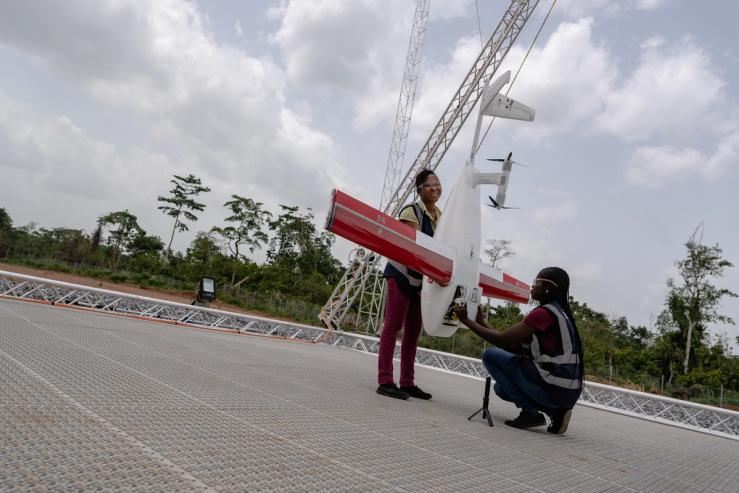
US drone logistics company Zipline will expand a three-year pilot program to deliver health supplies to a third of the Ivorian population over the next eight years, the latest sign that African governments are increasingly comfortable with using drones to provide social services.
The deal will see Zipline build nine more facilities in Côte d’Ivoire to add to the sole operation it has run there since 2023. After using drones to deliver nearly 4 million medical products — mainly vaccines and blood — to more than 200 healthcare centers in a region northwest of Abidjan, Zipline has now locked in a long-term contract that could serve 12 million people, roughly a third of the Ivorian population.
The Ivorian government will pay Zipline for operating costs for eight years, especially for pharmacy-grade warehousing, cold chain, digital tracking, and delivery, Caitlin Burton, Zipline’s head of global business said in a statement to Semafor. The company declined to say exactly how much it will receive, but expects the government to make a three-fold return on its investment.
The deal will ensure health facilities in areas that are difficult to access will receive “regular and secure supply,” Amadou Coulibaly, the Ivorian communications and digital economy minister, said earlier this month.

Know More
Zipline has operated drones in Africa for a decade and aims to be an on-demand delivery service. The Ivorian expansion builds on the company’s first steps in Rwanda in 2016, and is part of an Africa-wide expansion play. In Nigeria, it plans to reach about half of the 220 million population by adding a dozen hubs to existing operations in three states.
Nearly $2 billion from venture capital investors has underpinned Zipline’s global business that has grown from flying medical supplies to food delivery for Uber. It is in talks to raise $1 billion from Silicon Valley investors at nearly three times its most recent valuation of around $7.6 billion, according to reports last week.
But its Africa operations — which are still mostly about human health, with a gradual foray into livestock insemination — are benefitting from government funding. Zipline will cover its infrastructure costs in Côte d’Ivoire by unlocking money from a $150 million grant that the US government approved for the company last year. Washington conditioned the grant on Zipline’s ability to secure expansion contracts from African governments and get them to cover operating costs.

Notable
- Nigerian drone maker Terra Industries this month secured two contracts worth $3 million from private companies to deploy its drones and other technology for surveillance over mineral sites, including one affiliated with the Africa Finance Corporation.